How to clean retainers The complete guide that actually covers everything
Most people are told to wear their retainer every night. Far fewer are given genuinely useful guidance on how to clean it — and the result, in a huge number of cases, is a retainer that becomes progressively more unpleasant, less hygienic, and eventually damaged beyond use.
A retainer that is not cleaned regularly is not neutral. It is a breeding ground for bacteria, a surface for tartar to mineralise on, and — in the case of clear plastic retainers — a structure that gradually degrades and discolours. A badly maintained retainer can contribute to gum inflammation, bad breath and tooth decay. It also becomes noticeably unpleasant to put in your mouth, which creates a disincentive to wear it — the worst possible outcome when retention is the only thing standing between your current smile and relapse.
This guide covers how to clean retainers properly for every type — clear plastic (Essix) retainers, bonded wire retainers and traditional Hawley retainers — along with what to avoid, how often to clean them, storage guidance, and when to have them checked by a professional.
At Spa Dental Clinic in Droitwich Spa, led by Dr Murtaza Kaderbhai GDC: 103185 and Dr Nazia Alyas GDC: 103370, retainer care is discussed thoroughly with every patient who completes Invisalign or other orthodontic treatment. Here is everything you need to know.
Why cleaning retainers matters more than most people think
A retainer sits directly against the tooth surface and gum tissue for hours every day. In that time, it is exposed to the full bacterial environment of the mouth — saliva, food debris, and the same plaque-forming bacteria that cause tooth decay and gum disease.
Left uncleaned, a few things happen in sequence:
Bacterial biofilm builds up. The same bacteria that form dental plaque colonise the surface of the retainer, particularly in the grooves and recesses where they are not easily disrupted by saliva flow. This biofilm is the source of the white, cloudy film that appears on unwashed retainers and the unpleasant smell that many retainer wearers notice when they have not cleaned them consistently.
Tartar forms on the retainer. Just as plaque mineralises into tartar on the tooth surface when not removed, it mineralises on the retainer surface too. Tartar on a clear retainer is visible as a white or yellowish deposit that does not dissolve and cannot be removed by rinsing. Once tartar has formed, it can only be removed professionally.
The plastic degrades. Scratches in the plastic surface create microscopic grooves where bacteria accumulate preferentially. Over time, a scratched retainer becomes more and more difficult to clean effectively — and more likely to harbour odour-causing bacteria regardless of the cleaning method used.
The retainer becomes a source of oral health problems. A bacteria-laden retainer in contact with the gum tissue and tooth surface for eight or more hours a night is not a neutral presence. It can contribute to gum inflammation, localised tooth decay at the margins where the retainer sits against the teeth, and persistent bad breath.
The practical consequence of all this: cleaning the retainer consistently is not optional maintenance. It is part of what makes wearing the retainer safe.
How to clean retainers: by retainer type
Different retainers require different approaches, and using the wrong method can damage the retainer while failing to clean it effectively.
How to clean clear plastic (Essix) retainers
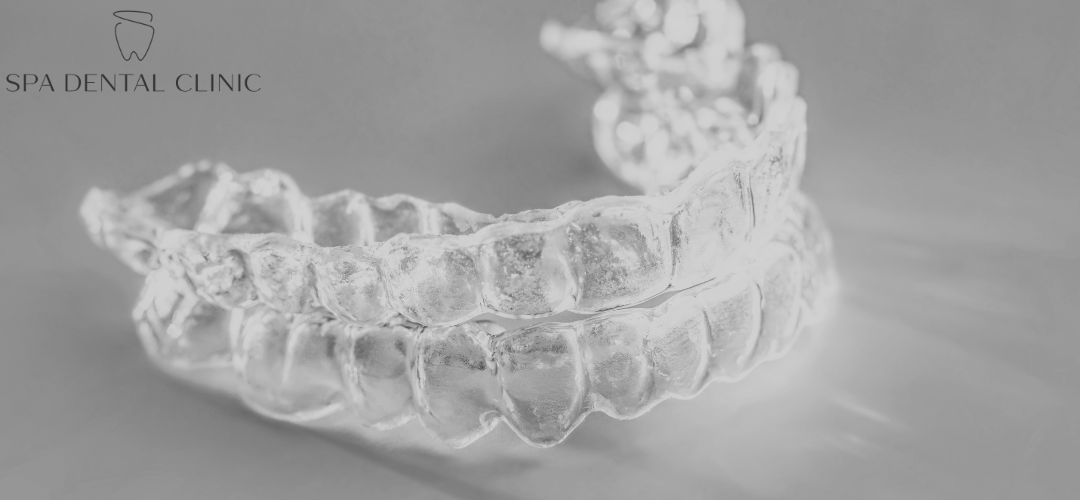
Clear Essix retainers — including the Invisalign Vivera retainers — are the most common type and the one most patients need guidance on. They look simple to clean, but a few specific details make a significant difference.
The daily cleaning routine
The best time to clean a clear retainer is immediately after removing it in the morning, before the saliva and biofilm on the surface has had time to dry and harden. Once dried biofilm mineralises into deposit, it is harder to remove.
1. Run the retainer under cool water. Cool only — never warm or hot, for reasons covered below.
2. Use a soft-bristled toothbrush (a separate one from your regular toothbrush, ideally) to gently brush the inner and outer surfaces of the retainer. No toothpaste — just water and the mechanical action of the bristles. Do this for 30 to 60 seconds, covering all surfaces.
3. Rinse thoroughly under cool water to remove any loosened debris.
4. Allow to air dry before storing in the case.
That is the baseline daily routine. It takes approximately 90 seconds and addresses the bacteria and early-stage biofilm before they have a chance to establish.
Weekly deep cleaning
In addition to the daily routine, a weekly soak in a retainer cleaning solution removes accumulation that the toothbrush cannot fully reach.
Retainer cleaning tablets — dissolved in cool water — produce a cleaning solution that the retainer soaks in for the duration specified on the packaging, typically 10 to 15 minutes. These are available from pharmacies and supermarkets. Brands like Retainer Brite and Steradent are widely used and effective for removing surface bacteria and light deposits.
Alternatively, a solution of equal parts white distilled vinegar and cool water provides a mild antiseptic soak. Submerge the retainer for 20 to 30 minutes, then brush and rinse as usual. Vinegar is effective for early tartar softening and has the advantage of being cheap and readily available, though the smell during soaking is notable.
For significant tartar build-up that these methods cannot shift, a diluted hydrogen peroxide soak (one part 3% hydrogen peroxide to three parts water, for no more than 30 minutes) can help — but this should not become a regular routine as frequent use may affect the plastic over time.
What never to use on clear retainers
This is as important as knowing what works, because the wrong approach can destroy a retainer quickly.
Toothpaste: The biggest mistake retainer owners make. Toothpaste — including so-called “gentle” formulations — contains abrasive particles designed to polish the enamel surface. On the soft plastic of a clear retainer, these particles create microscopic scratches that permanently cloud the surface and create bacterial havens. A single session of brushing with toothpaste may not produce a visible difference, but repeated use progressively degrades the clarity and cleanliness of the retainer. Avoid entirely.
Hot or warm water: Plastic retainers are thermoformed — they were made to the exact shape of the teeth at a specific temperature. Exposing them to warm or hot water causes the plastic to soften and warp, altering the fit. Even one episode of hot water exposure can change the retainer’s fit enough to require replacement. Always use cool or cold water.
Mouthwash containing alcohol: Alcohol-based mouthwash dries out and weakens the plastic over time, causing small cracks and stress fractures. The colouring agents in many mouthwashes can also permanently stain the retainer. If you want to soak in a mouthwash, use an alcohol-free, colourless formulation — though a purpose-made retainer cleaner is preferable.
Bleach or harsh chemical disinfectants: These damage both the plastic and the metal components in some retainer designs, and the residue is not something you want in contact with your teeth and gums.
The dishwasher: The combination of heat and high-pressure water jets is incompatible with a clear retainer’s survival.
How to clean dental retainers that are bonded wire retainers
A bonded wire retainer — the thin metal wire cemented to the back of the teeth — is a different challenge because you cannot remove it. How to clean dental retainers of this type is primarily about cleaning the teeth around the wire effectively, which requires different tools from standard brushing.
Daily cleaning around a bonded retainer
Standard brushing cleans the outer surfaces of the teeth. The problem is the contact between the retainer wire and the tooth surface, and the gum tissue immediately beneath the wire — standard brushing does not reach either of these effectively.
The tools that work:
Superfloss: A special type of floss with a stiffened end that can be threaded under the wire. Once threaded, the spongy middle section cleans beneath the wire and between the teeth. This is the most thorough option for cleaning fixed retainers and should be used at least once daily.
Floss threaders: A small plastic loop that allows standard floss to be threaded beneath the wire, achieving the same result as superfloss. These are inexpensive and available from pharmacies.
Water flossers (oral irrigators): A water flosser directs a pulsed jet of water into the spaces between teeth and beneath the wire, flushing out debris and disrupting the bacterial biofilm. These do not replace mechanical cleaning but are an excellent supplement, particularly for patients who find threading floss under the wire frustrating.
Interdental brushes: Small cylindrical brushes cannot pass beneath the wire, but they can be used alongside the wire from different angles to reach plaque accumulation at the gum margin. Use the smallest size that fits the space.
Professional cleaning for bonded retainers
No matter how diligent the home routine, tartar builds up around a bonded wire retainer over time — particularly at the bonding points where the wire attaches to the tooth surface. This tartar cannot be removed at home and must be professionally scaled at a dental hygienist appointment.
The hygienist will also check the integrity of the bonding at each visit — whether the wire is still securely attached to all the teeth it should be. A partially detached wire can go unnoticed by the patient while the unsupported tooth begins to drift, which is why having it assessed at every dental check-up is important.
How to clean retainers that are Hawley retainers
A Hawley retainer — the traditional design with an acrylic plate and a metal wire — is cleaned similarly to a clear removable retainer, with a couple of modifications.
The acrylic plate can be brushed with a soft toothbrush and cool water. The metal wire should be brushed gently — too much force on the wire over time can alter its position slightly. Avoid soaking Hawley retainers in mouthwash or any solution containing alcohol, as this can damage the acrylic. Retainer cleaning tablets or diluted vinegar are appropriate for the weekly deep clean.
Hawley retainers should also have the wire checked at each dental check-up — the clasps that anchor the retainer to the back teeth can loosen over time and may need professional adjustment.
How to clean retainers at home using an ultrasonic cleaner
An ultrasonic cleaner — a small device, widely available for under £30 online or from pharmacies — uses high-frequency sound waves to create microscopic bubbles in a cleaning solution. These bubbles implode against the retainer surface, dislodging bacteria, debris and early tartar in a way that soaking alone cannot achieve.
For patients who are serious about retainer hygiene, an ultrasonic cleaner used weekly (filled with cool water and a small amount of retainer cleaning solution or white vinegar) is one of the most effective how to clean retainers at home approaches available. It reaches areas that brushing and soaking miss — the inner surfaces, the grooves where the teeth imprint into the plastic, and the edges.
Ultrasonic cleaners are not suitable for Hawley retainers with specific acrylic formulations, or for retainers with any damage such as cracks, as the vibrations can worsen existing structural weakness. Check with your clinician if unsure.
Storage: the step most people overlook
A retainer case is not optional — it is the only safe place for a retainer that is not in your mouth.
Retainers left on a tissue are thrown away. Retainers left loose on a surface are sat on, snapped, or become a toy for pets. Retainers stored in a warm or sunny location warp. Retainers stored wet in a sealed case develop bacterial growth in the moist environment.
The correct storage is: rinse the retainer, allow it to air dry for a few minutes (a quick shake removes most of the water), and place it in the case with the case open slightly or left ajar — not sealed while wet. Store somewhere cool, away from sunlight and heat sources.
Carry a spare case when travelling. The number of retainers lost in restaurant napkins, hotel rooms and on aeroplanes is significant.
When to have your retainer professionally checked
Even the most diligently cleaned retainer needs periodic professional assessment.
At a dental check-up at Spa Dental Clinic, the clinical team checks the fit of the retainer against the current tooth positions — identifying any changes in fit that suggest tooth movement. A retainer that no longer fits properly is telling you something important. It also provides an opportunity to professionally clean any tartar deposits on the retainer surface that home cleaning has not fully addressed.
Dental hygienist appointments are specifically important for patients with bonded wire retainers, where the professional cleaning of the area around the wire is not something that home care can replicate. Scheduling these every three to six months — consistent with the typical dental hygienist appointment frequency recommended for most adults — keeps the tissue around the bonded retainer in good health and the wire properly assessed.
When to replace a retainer
Clear retainers do not last indefinitely. Signs that replacement is needed:
The retainer has become visibly cloudy despite regular cleaning — this typically means the plastic has been scratched beyond the point where it can be cleaned effectively.
There are cracks or chips in the plastic — a cracked retainer does not maintain the correct fit, and cracks can harbour bacteria in ways that cleaning cannot address.
The retainer no longer seats fully or correctly — either the fit has changed because the teeth have moved, or the plastic has warped.
The retainer causes discomfort it did not previously cause — a change in fit changes the pressure points.
The retainer has a persistent odour despite thorough cleaning — bacterial colonisation within the degraded plastic surface that cleaning cannot fully remove.
Replacement retainers are made from a new scan or impression of the current tooth positions. If there has been any tooth movement since the original retainer was made, the new retainer holds the teeth in their current position rather than returning to the original post-treatment position — so prompt replacement is preferable to delayed replacement.
Bottom line
How to clean retainers is not complicated — but it requires consistency, the right tools, and an understanding of what not to use. Daily brushing with a soft toothbrush and cool water, weekly soaking in a retainer cleaning solution, proper storage between uses, and regular professional review covers everything needed to keep a retainer hygienic, effective and lasting.
How to clean dental retainers properly extends the lifespan of the retainer, protects the teeth and gums it contacts, and keeps the wearing experience pleasant enough that you actually do it every night.
And how to clean retainers at home — the daily and weekly routines above — is the vast majority of what is needed, supplemented by a professional clean at each hygiene and check-up appointment.
At Spa Dental Clinic in Droitwich Spa, Dr Murtaza Kaderbhai GDC: 103185 and Dr Nazia Alyas GDC: 103370 are available to answer questions about retainer care, assess the fit of existing retainers, and provide replacement retainers where needed. If you are having Invisalign treatment or have completed orthodontic treatment elsewhere and need guidance on retention, dental check-up appointments include retainer assessment as standard.
Disclaimer
The information in this article is intended for general educational guidance only and does not constitute personalised dental advice. For concerns about your specific retainer type, fit or cleaning routine, please book an appointment with a qualified dental professional.
Spa Dental Clinic is a private dental practice at 47 Blackfriars Ave, Droitwich WR9 8RT — Worcestershire’s number one Diamond Invisalign Provider — led by Dr Murtaza Kaderbhai GDC: 103185 and Dr Nazia Alyas GDC: 103370. We offer Invisalign, dental check-ups, dental hygienist appointments, dental implants, composite bonding, porcelain veneers, teeth whitening, dental crowns, smile makeovers and emergency appointments.